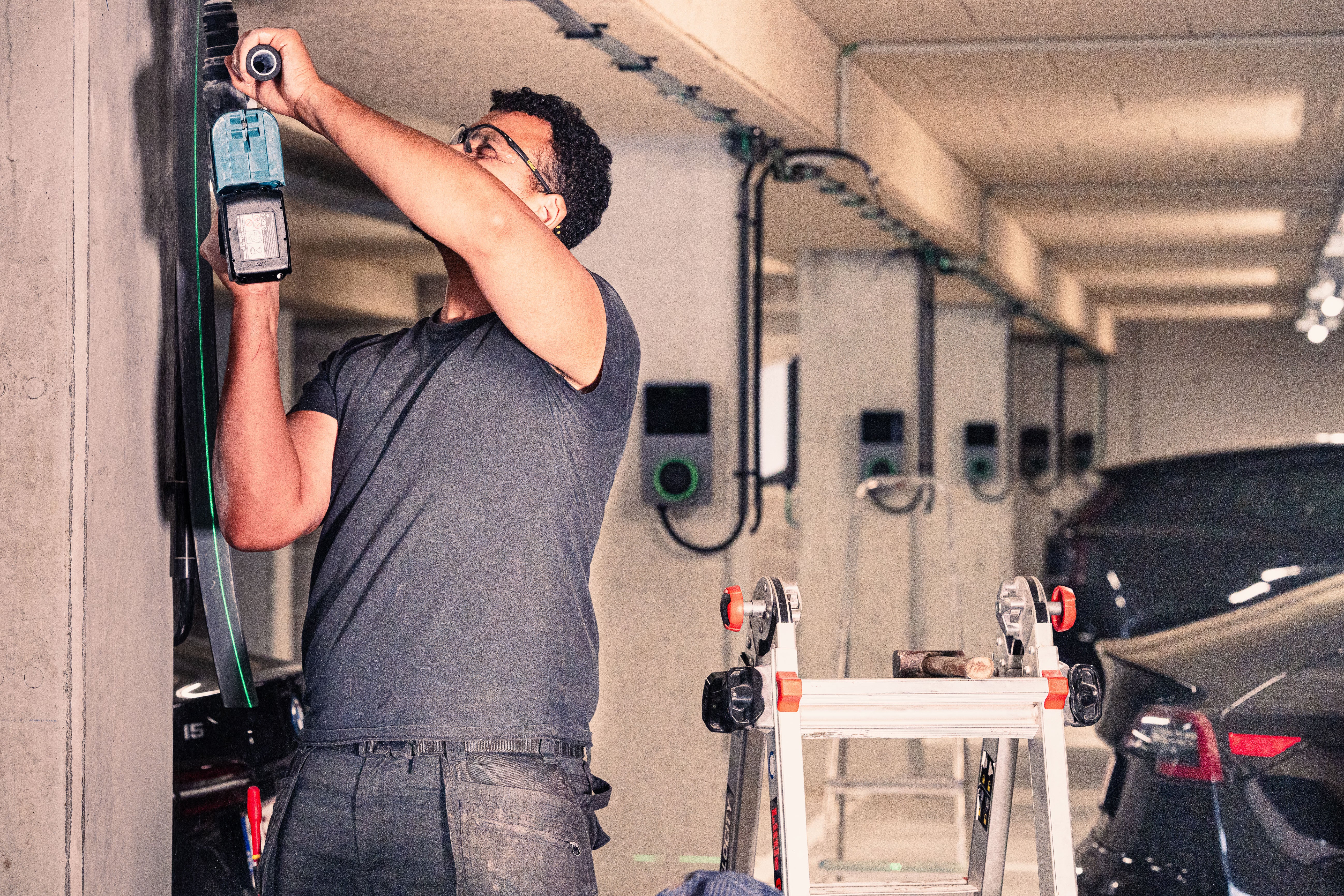

You may have already heard about the different charging modes for electric cars. We have listed them clearly for you.
Charging mode 1: the household plug
The simplest way of charging. You plug the car into the household socket. The rectifier is located inside the vehicle. Charging takes a long time, and be aware that the safety of the circuit used is not guaranteed in this way. Consequently, this method is no longer used, and in some countries, it is even prohibited.

Charging Mode 2: Cable Control Box
If you want to charge via a standard wall socket, this is the way to do it. A Cable Control Box (ICCB) is integrated. This box contains a residual current device (RCD) and current limiting. If there is proper grounding, this is a safe solution. It is important to limit the charging current somewhat. After all, household sockets are not designed to withstand prolonged loads of high current. This can cause the socket to become dangerously hot. Charging in this way can take some time.
Charging Mode 3: safe way to charge
Mode 3 utilizes plugs and sockets specifically designed for charging electric vehicles. The socket is built into the charging point, which is a fixed component of a home electrical installation. Continuous communication between the charging point and the vehicle ensures safe charging. Charging is significantly faster because higher currents are permitted. Furthermore, charging times can be configured, often allowing for a more favorable rate.

Charging mode 4: fast charging
Charging mode 4 is also known as fast charging. With this method of charging, the rectifier is located in the charging station. Naturally, this makes the installation more expensive. This is not an option for home charging.