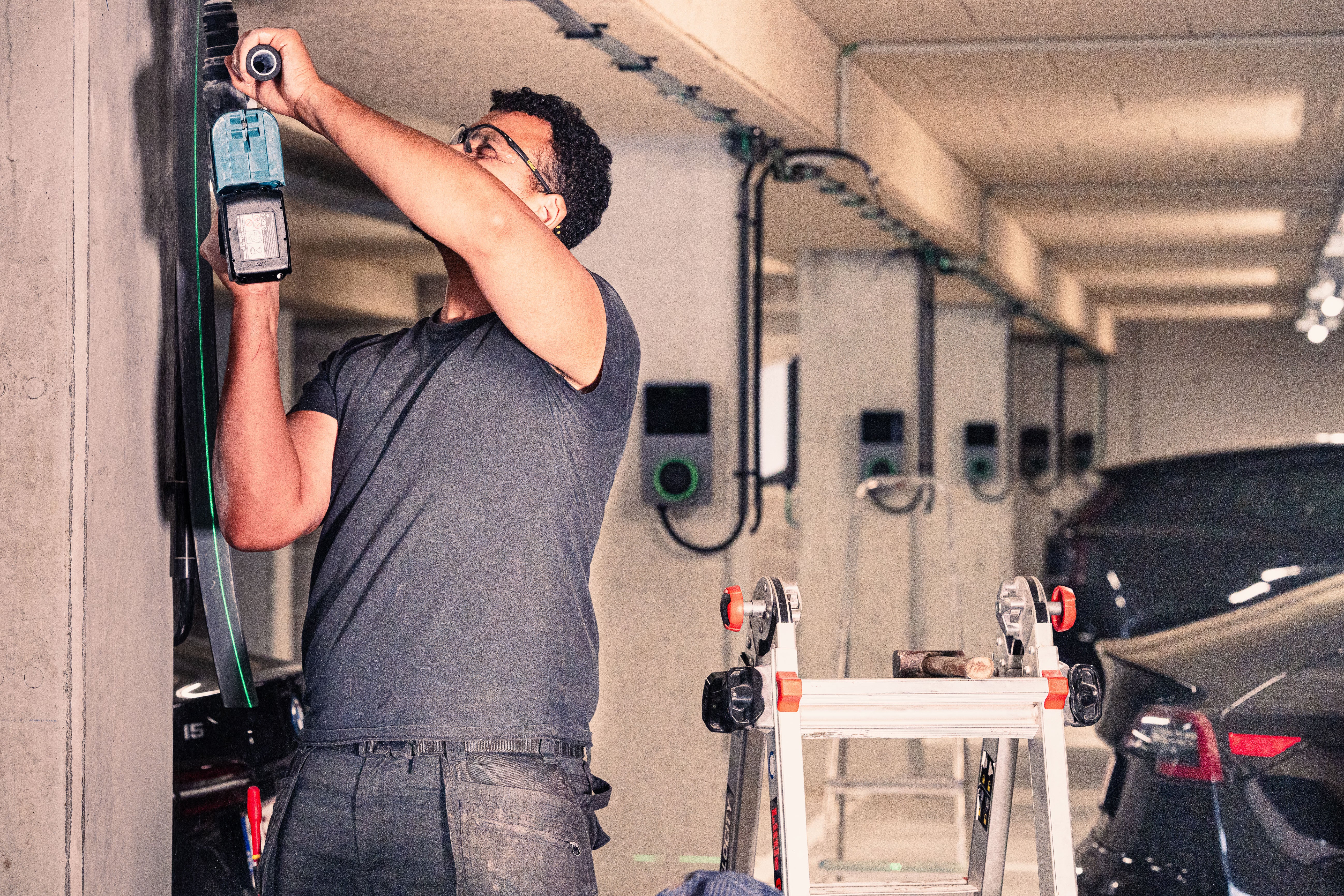


Imagine starting every morning with a fully charged car, ready to leave. A home charging point for electric cars makes this a reality, and it is not just about convenience – it is also significantly cheaper than public charging stations. For Belgian drivers, switching from public charging stations to their own driveways is quickly becoming the new norm. Frankly, it is one of the smartest investments you can make in your daily routine.
Why Your Driveway Is the New Gas Station
Just think about it: no more waiting in line at a public charging station. The switch to electric driving is completely changing how we think about "refueling." Your home is becoming the primary place to charge your car's battery, setting a completely new standard for convenience and simplicity.
This shift is not happening in a vacuum; it is driven by the explosive growth of electric vehicles here in Belgium. The market has completely reshaped the country's automotive landscape, creating enormous demand for reliable home charging solutions. In recent years alone, tens of thousands of new fully electric vehicles have appeared on Belgian roads. This rise marked a historic turning point: for the first time ever, electric and hybrid vehicles together more than half of all new car registrations out. You can dive deeper into the full story in this findings on cleantechnica.com.
The Benefits for Directors and Companies
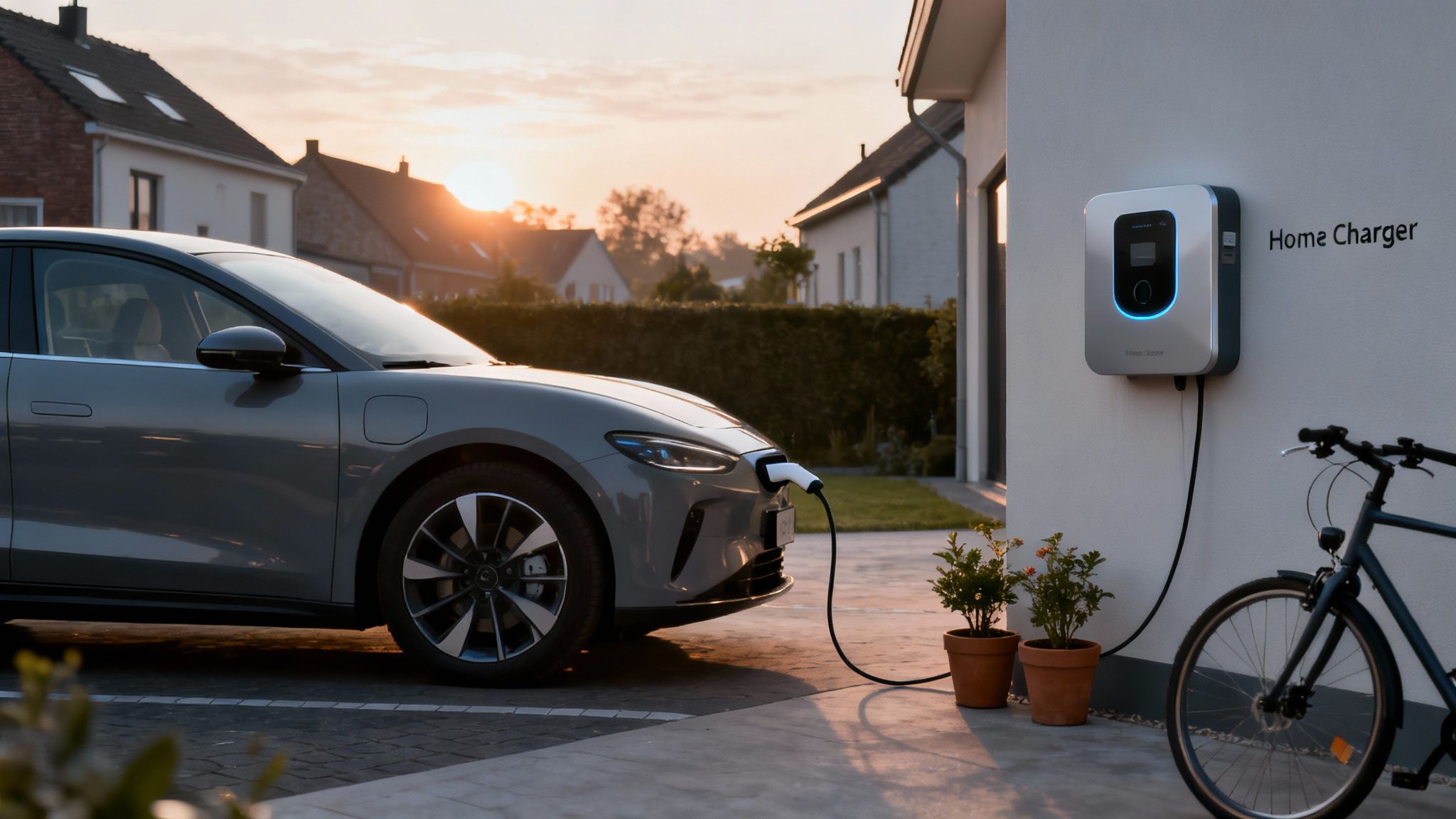
For individual drivers, the benefits are crystal clear. You charge when it suits you—usually at night—and benefit from lower off-peak electricity rates. The cost savings compared to both public charging and traditional fuel are substantial.
For companies, this opens up a world of new possibilities for the management of company vehicles. home charging point for electric cars an employee's vehicle essentially becomes an extension of the company's own charging infrastructure. With smart charging solutions like those from Blulinc, it is incredibly simple to automatically and transparently reimburse employees for the electricity they use to charge their company car at home.
This setup eliminates the hassle of expense claims for employees and gives fleet managers a clear, centralized overview of all charging costs – whether they occur at home, at the office, or on the road.
Your Practical Guide to Getting Started
Consider this guide your roadmap for the installation and management of a home charging station. We walk you through everything you need to know, from choosing the right charger to navigating Belgian regulations and available subsidies. Whether you are an individual EV driver or a fleet manager setting up an efficient charging program for your team, we have the practical insights you need for a smooth transition.
So let's take that crucial first step: choosing the right charging point that perfectly suits your vehicle, your lifestyle, and your home.
Choosing the Right Home Charging Point
Choosing the right home charging point for electric cars It can feel a bit technical, but honestly, it comes down to just three things: your car, how much you drive, and what your home's electrical system can handle. If you get these three right, you have a system that just works, day in, day out.
Let's start with the most important number: the charging capacity, measured in kilowatts (kW). Think of it as the water pressure in a garden hose – a higher kW output means you can "fill" your car battery much faster.
For most homes here in Belgium, you look at a few standard capacity levels. Which one you choose has a direct impact on how long it takes to get a full charge, so it is worth aligning it with your daily life.
How Much Capital Do You Really Need?
First, think about your typical day. Do you have a short commute, or are you regularly on the road for longer distances? The answer tells you a lot about the type of power you need at home.
If, for example, you daily approximately 50 km drives a Renault Zoe, is a charger of 7.4 kW Perfect. This easily charges your battery overnight with plenty of time to spare. But if your family car is a Tesla Model Y with a much larger battery, you will need a more powerful one. 11 kW or even 22 kW really appreciate the installation. This way, you can be sure that you always have a full "tank" in the morning, even after a long weekend away.
Single-phase versus three-phase connection
The next piece of the puzzle is your home's electrical connection. In Belgium, most homes have a single-phase or three-phase connection, and this determines the maximum load capacity you can safely install.
- Single phase: This is the standard for many homes and can comfortably accommodate chargers up to 7.4 kW support. For many EV drivers, especially those with smaller batteries or who do not drive enormous distances daily, this is more than enough.
- Three-phase: This is a more powerful connection that opens the door to chargers from 11 kW or 22 kW. It charges your car significantly faster and is ideal if you have a vehicle with a large battery or plan to have more than one EV in the future.
Don't worry if this sounds complicated. A good installer will check your connection during a site visit to see what is possible. We provide this assessment to ensure that whichever charger you choose fits your home perfectly and safely.
Here is the most important thing to remember: a faster charger is only useful if your car can actually handle that speed. Many electric cars are limited to 11 kW for AC charging, so installing a 22 kW The charger would not provide you with any extra benefit. Always check your car's specifications first!
To help you visualize what this means in practice, here is a brief overview of how these power levels translate into load times for a typical 60 kWh EV battery.
Charging capacity and Estimated charging time
This table provides a clear comparison of common power levels for home charging points and the estimated time required to fully charge a typical 60 kWh EV battery, so that you can visualize the performance differences in practice.
| Charging capacity (kW) | Connection type | Typical Use | Estimated Time to Full Charge (60 kWh) |
|---|---|---|---|
| 3.7 kW | Single phase | Charging overnight for plug-in hybrids or drivers who drive few kilometers. | About 4 p.m. |
| 7.4 kW | Single phase | Standard overnight charging for most fully electric cars. | About 8 hours |
| 11 kW | Three-phase | Faster overnight charging, ideal for larger batteries. | About 5.5 hours |
| 22 kW | Three-phase | Very fast home charging, suitable for high-end EVs. | About 2.75 hours |
As you can see, the difference between a basic charger of 3.7 kW and a robust unit of 11 kW enormous – it is the difference between a full charge overnight and needing more than a day.
Why a Smart Charger Is a Must
Besides pure speed, it is the intelligence in the charger that truly takes the experience to a higher level. This is where a "smart" charger becomes an absolute game-changer, especially if you drive a company car.
Unlike a simple "dumb" charger that only supplies electricity, a smart charger is connected to the internet. This unlocks some incredibly useful features. You can schedule charging sessions to run during off-peak hours when electricity is cheapest, which directly lowers your energy bill.
They are also equipped with dynamic load balancing. This is a crucial safety feature that monitors your home's total electricity consumption. If it detects that you have the oven and the heat pump switched on simultaneously, it will automatically reduce the charging speed of the car to prevent the main switch from tripping. It is brilliant.
Best of all for employees, a smart charger connects directly to management platforms like ours. This enables fully automatic and transparent reimbursement of your home charging costs by your employer. Every kilowatt-hour is tracked, calculated, and settled without you having to do anything. If you are considering a home charging point for your company car, exploring our special home charging solutions to show you how seamless it can be.
From Inspection to Your First Load: The Installation Process
You have chosen the perfect charger. Now comes the exciting part: your home charging point for electric cars install and prepare for use. This is not a weekend job. It is a professional task that guarantees safety, compliance, and your own peace of mind.
The entire process, from the initial site visit to that first satisfying click of the plug, is a carefully planned journey to seamlessly integrate the charger into your home.
It all starts with a mandatory electrical inspection. Here in Belgium, this is regulated by the AREI/RGIE regulations – strict rules designed to keep your home and family safe. A certified installer is not just recommended; it is a must. He will thoroughly inspect your main electrical panel to ensure it can handle the extra load of an EV charger.
This initial on-site inspection forms the basis for everything that follows. The installer will map out the best, most efficient route for the new cabling, from your panel to the exact location where you want your charger. He will also check your existing wiring and see whether you have a single-phase or three-phase connection.
Technical Inspection and Safety Certification
Before a single tool is used, the installer confirms that every part of the plan complies with regulations. This is not merely a formality; it is a critical safety measure. Standard practice includes the installation of a separate circuit specifically for your charging point.
Think of it this way: your EV charger is one of the most powerful devices you will own.By giving it its own circuit, you are effectively giving it a private, fast lane on the highway, which guarantees that it performs flawlessly without causing traffic jams for the rest of your house.
To get a better idea of what this entails, some guides about a safe and efficient smart home electrical installation offer valuable insights. Good preparation ensures that the physical installation proceeds flawlessly.
As soon as the green light is given, the real work begins. This usually involves mounting the unit to a wall or a dedicated pole and laying the specialized, heavy-duty cabling. A professional ensures that the entire installation is neat, weather-resistant, and, most importantly, safe.
The Magic of Dynamic Load Balancing
One of the smartest features that we set up perfectly is dynamic load balancing. This smart technology is the guardian angel of your home and protects it against electrical overload.
Imagine this: you come home, plug in your car, and go inside to cook on your electric stovetop. At that moment, the heat pump switches on. Without load balancing, that sudden spike in power consumption could easily trip your main switch, plunging the entire house into darkness.
A smart charger with dynamic load balancing constantly monitors your home's total energy consumption. If it detects a peak, it automatically reduces your car's charging speed. As soon as the other major appliances switch off, the charging power is smoothly ramped up again.
This intelligent system means you never have to worry about overloading your connection. It often enables you to install a more powerful charger without needing an expensive upgrade to your grid connection, which is a big win for your wallet.
As this guide shows, choosing the right charger is a balance between your car, your habits, and what your home can handle.
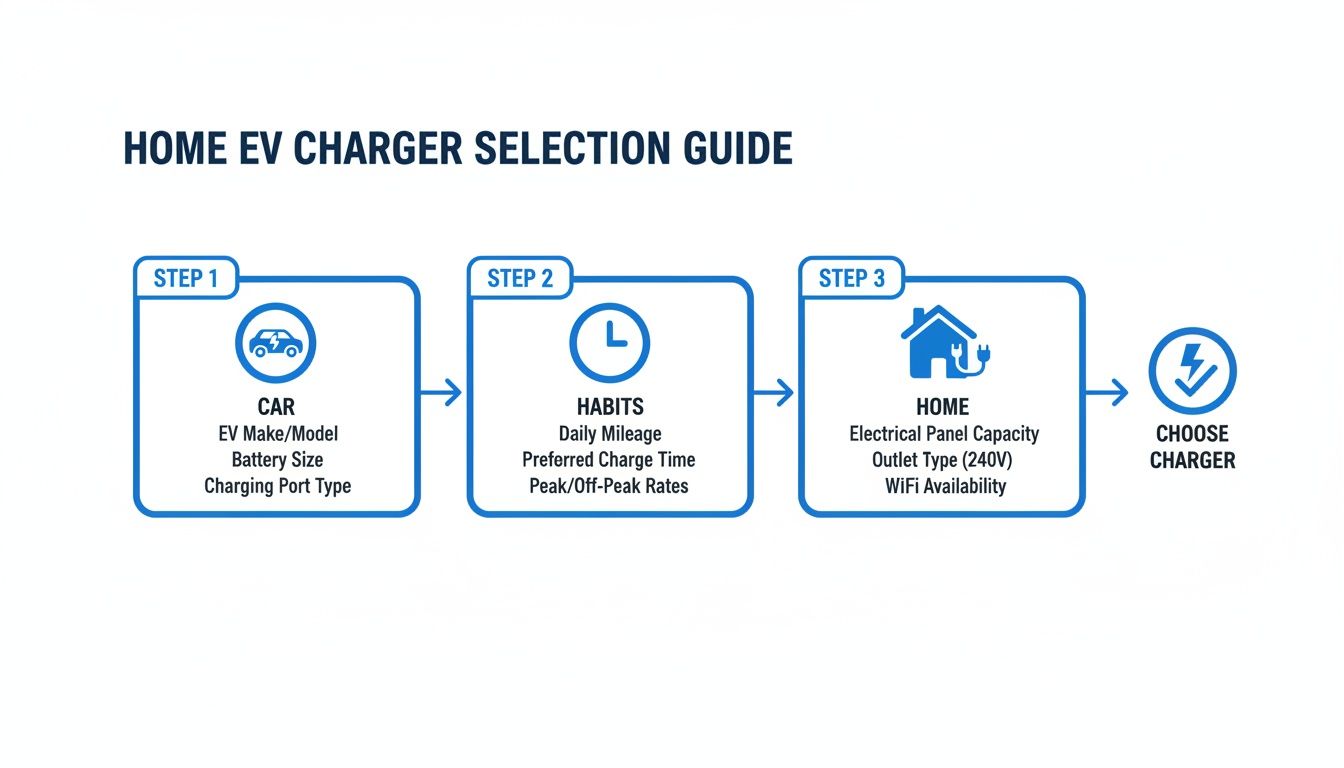
This emphasizes how a successful installation truly begins with understanding your specific needs, long before any hardware is involved.
Commissioning and Handover
The final piece of the puzzle is commissioning. Your installer switches on the unit, performs a full series of tests, and confirms that it communicates correctly with our Blulinc app. Next, you receive a full tour – how to use it, what the lights mean, and how to manage everything from your phone.
This handover is your moment to ask anything. We want you to feel completely comfortable and confident. You will also receive all official documents, including your AREI/RGIE conformity certificate, which is crucial for insurance and regulatory reasons.
And just like that, you are all set. The pure convenience of waking up every morning with a full battery is now yours.
Insight into Costs, Subsidies, and Repayment
Installing a home charging point for electric cars It is a fantastic long-term investment, but it is crucial to understand the numbers from the start to truly benefit from it. The price on the box is only part of the story; you must also take into account professional installation and, of course, the electricity you will use.
Let's take a look at what you can expect to budget and, more importantly, where you can save.
In Belgium, you should generally expect a start-up cost between €1.500 and €2.500. That amount generally covers both the smart charging unit itself and the full installation by a recognized professional.
Of course, that is an estimate. The final price may vary depending on the specific characteristics of your home. For example, if your desired charging location is far from your electrical panel, the extra cabling and labor will increase the cost. A more complex job, such as one that requires a minor upgrade to your home's electrical board, can also drive up the price.
Making Optimal Use of Belgian Subsidies
Here is the good news: the Belgian government and the regional authorities are keen to help people make the switch to electric. They offer several attractive financial incentives that can cover a significant portion of that initial investment.
These benefits often come in the form of tax reductions for the purchase and installation of a smart charger. The exact rules can change and differ between Flanders, Wallonia, and the Brussels-Capital Region, so it is always a good idea to check the latest details. We have compiled a handy resource to help you with this, so be sure to check out our guide on the unlocking government support for EV charging stations in Belgium.
The demand for charging points is a huge national priority. Belgium has set the ambitious goal to by 2030 220,000 smart charging points to install, which is a gigantic undertaking for both public and private infrastructure. This commitment truly highlights why intelligent, connected home charging points are so important for building a stable and efficient energy grid.
When researching financial support, it is sometimes helpful to see what is happening elsewhere for context. Programs such as the Home Energy Scotland grant show a broader trend of governments supporting sustainable home upgrades, even though the specific details are different.
The Magic of Automatic Reimbursement by the Employer
If you drive a company car, this is where it gets really interesting. Automatic reimbursement for your home charging sessions is probably the biggest financial gain, and that is where a smart platform like Blulinc completely changes the game.
Forget the old days of tracking mileage, guessing electricity costs, and submitting cumbersome expense reports. A smart charger connected to our platform takes care of everything for you.
It is beautifully simple:
- Utmost Accuracy: The charger measures every kilowatt-hour (kWh) used to charge your company car. No estimates, only facts.
- Automatic Invoicing: Our platform uses that data and calculates the exact costs based on a pre-agreed rate. It is fully transparent.
- Effortless Payouts: The system automatically forwards the details to your employer for settlement. No paperwork, no hassle.
A Practical Example
Imagine a fleet manager who 20 employees has to manage those who all charge their company EVs at home. Without a smart system, that manager drowns in 20 separate expense reports every month, all based on guesswork and manual logs. It is a time-consuming nightmare, and errors are inevitable.
Now imagine that same fleet with a solution managed by Blulinc. The manager gets one clean, simple overview of all home charging activities – total energy consumed, total costs. The data is precise, easy to audit, and offers truly useful insights for managing the company's mobility budget.
This is what modern efficiency looks like.It saves time for everyone involved, eliminates administrative headaches, and guarantees that every employee is reimbursed accurately. It transforms the home charging point for electric cars in a seamless and powerful part of your business.
Your Home Charging Point: More Than Just a Socket
Installing a home charging point for electric cars It is a big step, but don't view it as an isolated socket for your driveway. It is actually your personal driveway to the full ecosystem of electric mobility. This connection makes owning an EV truly convenient and integrated into your daily routine.
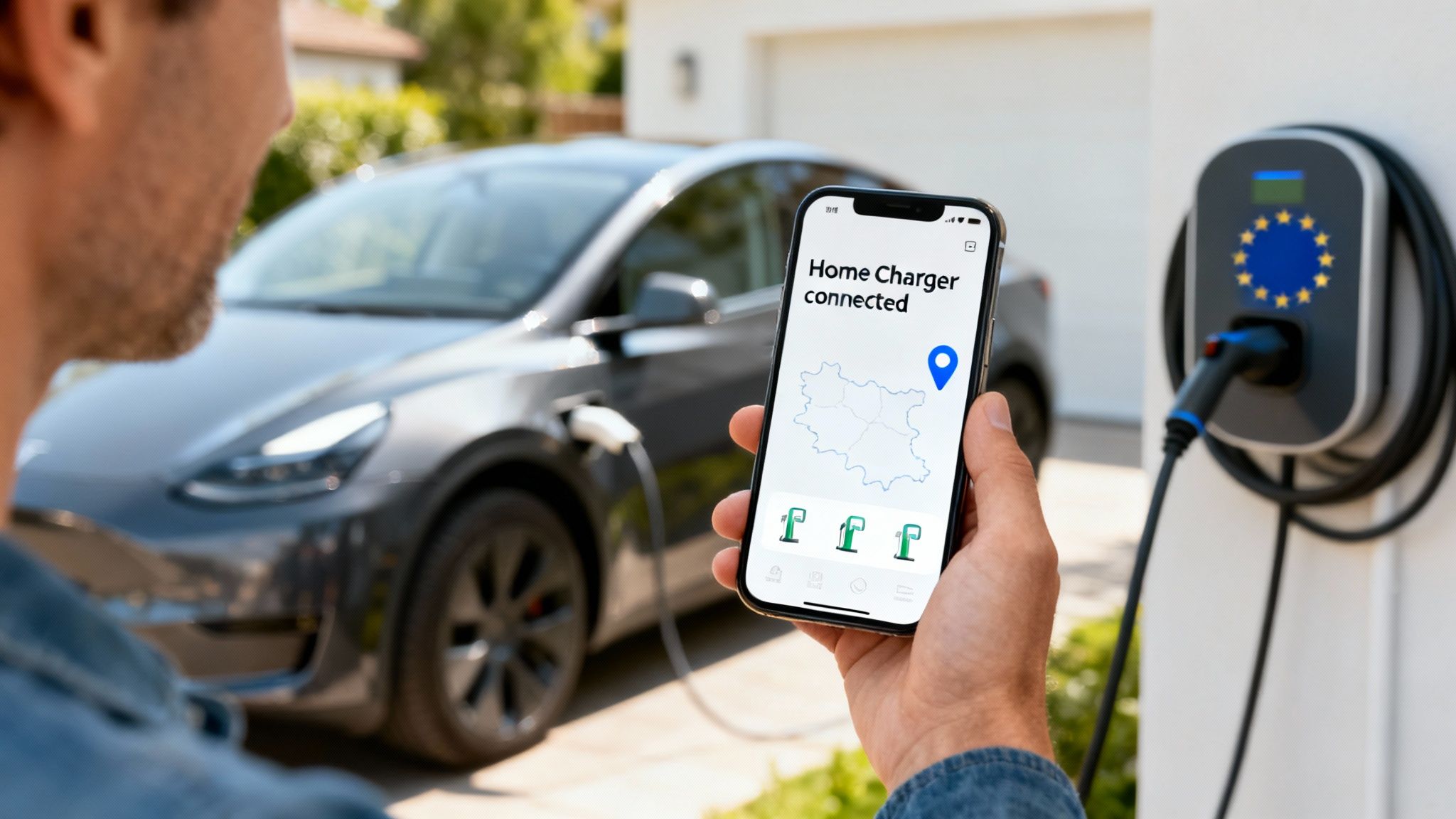
The old days of juggling different apps and payment cards for each charging network are over. With a modern, unified solution, one app and one card become your universal key. You can manage a charge at home, plug in at the office, and access public stations on the go, all via a single, trusted interface.
One Card to Use Them All
The magic word here is interoperability. It is a simple concept: your charging card simply works, wherever you are. A platform like Blulinc, for example, gives you seamless access to a huge network of more than 900,000 public charging points throughout Europe.
This immediately eliminates one of the biggest headaches for EV drivers. No more worrying about whether your card will be accepted or the hassle of downloading the right app. You simply tap, charge, and go on with your day. It is that kind of effortless experience that makes owning an EV a true pleasure. You can delve deeper into how our Blulinc charge cards and their management options work.
A Clear Overview for Fleet Managers
For companies that manage a fleet, this integrated approach is absolutely essential. It provides a complete, real-time picture of all fleet charging activities, regardless of where they take place.
Think about it. An employee plugs in at home, connects at the office, or recharges at a public station during a business trip. All that data flows directly to one central dashboard. This uniform reporting is a game-changer for a few key reasons:
- Total Cost Analysis: You get a crystal-clear overview of the total energy consumption and costs of your fleet. No more guesswork.
- Budget optimization: Armed with real data, you can recognize charging patterns and make smart decisions to get the most out of your mobility budget.
- Program efficiency: It provides the overview needed to ensure your EV program runs smoothly, without administrative blind spots.
Imagine a sales representative who charges at home on Monday, uses the office charger on Tuesday, and stops at a public fast charger during a client visit on Wednesday. A unified system captures all three sessions, consolidates the costs, and presents them in a single, easy-to-read report.
The Thriving Charging Network of Belgium
This seamless connectivity is supported by an infrastructure that is growing at an incredible pace. Belgium has recently reached a major milestone by the 100,000 publicly accessible charging points to exceed. This rapid expansion means that a reliable charging point is almost always around the corner, whether you are at home or on the road.
Initiatives such as the ChargyClick program in Brussels have been particularly effective, aiming to ensure that every resident has a charging station within 150 meters of their home. This kind of commitment to accessibility is what keeps the entire EV ecosystem running.
Ultimately, connecting your home charging point to this broader network unlocks the true potential of electric driving. It provides the driver with total convenience and offers the company powerful, actionable insights.
Your Questions about Home Charging Answered
Even with all the benefits, you probably still have a few practical questions about installing and using a home charging point for electric cars. Let's address some of the most common questions we hear from executives and companies.
Do I need to increase the electrical connection of my house?
Not always, but that is something a professional needs to confirm. Most modern Belgian homes can accommodate a standard charger of 7.4 kW or 11 kW on without major work.
Before anything is installed, a certified installer must perform an AREI/RGIE inspection to ensure that your electrical panel has sufficient capacity. If you want a faster 22 kW If you are considering whether to use high-consumption devices such as a heat pump, an upgrade may be necessary. This is exactly where a smart charger comes in. dynamic load balancing proves its value – it intelligently manages your existing power, often avoiding a costly upgrade of the grid connection.
What is the Real Difference Between Smart and Regular Chargers?
Think of it this way: a standard charger only supplies power. That is all. A "smart" charger, on the other hand, is connected to the internet, and that opens up a world of features that make your life easier and save you money.
With a smart charger, you can:
- Loading plans to benefit from cheaper off-peak electricity rates.
- Start or stop a session from any location with an app on your phone.
- Protecting your home's circuits with dynamic load balancing.
- Track every kWh consumed for automatic reimbursement for a company car.
For company car drivers, that last point is the most important. The ability to automatically track and report energy consumption is the key to effortless, transparent reimbursement. This is precisely why we at Blulinc recommend almost exclusively smart charging solutions.
How Does Automatic Refund for Home Charging Work?
It is actually a very smooth, fully automated process managed by a platform like ours. The employee's smart charger at home is directly linked to his account on the Blulinc platform.
Every time he plugs in his company car, the charger records the exact amount of electricity used. This data is securely sent to our platform, which calculates the costs based on a pre-agreed rate. The system then prepares everything for reimbursement, completely eliminating the need for manual expense reports. It is total transparency for both the employee and the employer.
Can I install a home charging point myself?
In one word: no. In Belgium, installing an EV charger is strictly a task for a certified electrician. Subsequently, the entire installation must be inspected to receive an AREI/RGIE conformity certificate.
This is not bureaucracy; it is a crucial matter of safety. Incorrect installation poses a serious fire risk and can cause thousands of euros in damage to your vehicle. Hiring a professional guarantees that the work is safe, complies with all regulations, and is properly insured. It is all about peace of mind.
Bee Blulinc We are here to guide you through every step of your e-mobility journey, from choosing the right hardware to guaranteeing a seamless refund process. Our expertise is your advantage.
Ready to make home charging a reality for your business or yourself? Request a free consultation with our experts today.