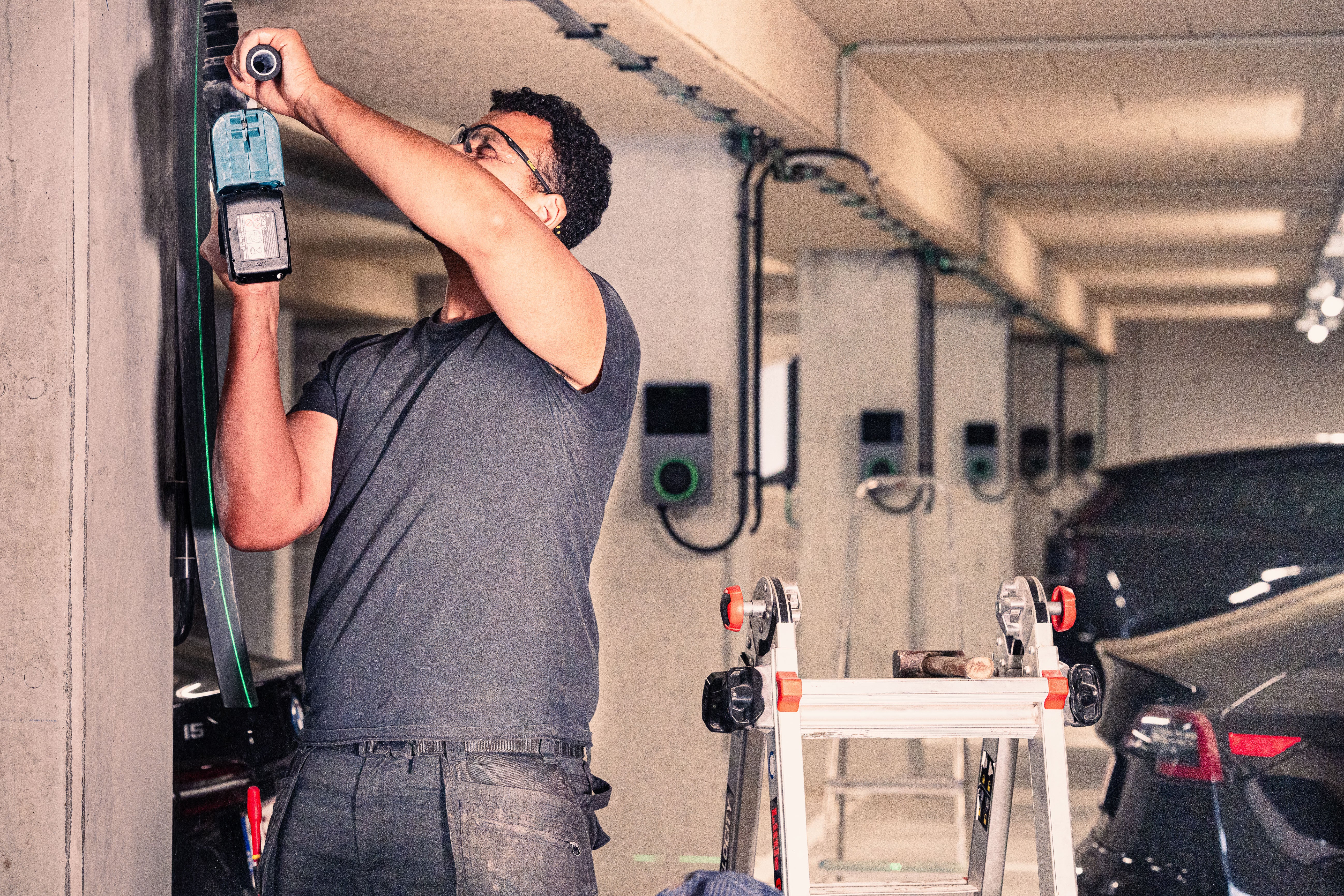


Charging your electric car at home is by far the most convenient and affordable way to hit the road with a full battery every day. But what is the best way to go about it? Instead of messing around with an unsafe and frustratingly slow socket, a smart, professionally installed charging station The standard for safety, speed, and efficiency. That is the key to worry-free electric driving.
The Benefits of Your Own Charging Point at Home
Installing your own charging point completely changes how you use your electric car. The convenience of plugging in at night and leaving in the morning with a full battery is priceless. But the benefits go far beyond mere comfort. A standard socket can be a stopgap solution, but it entails serious risks and disadvantages.
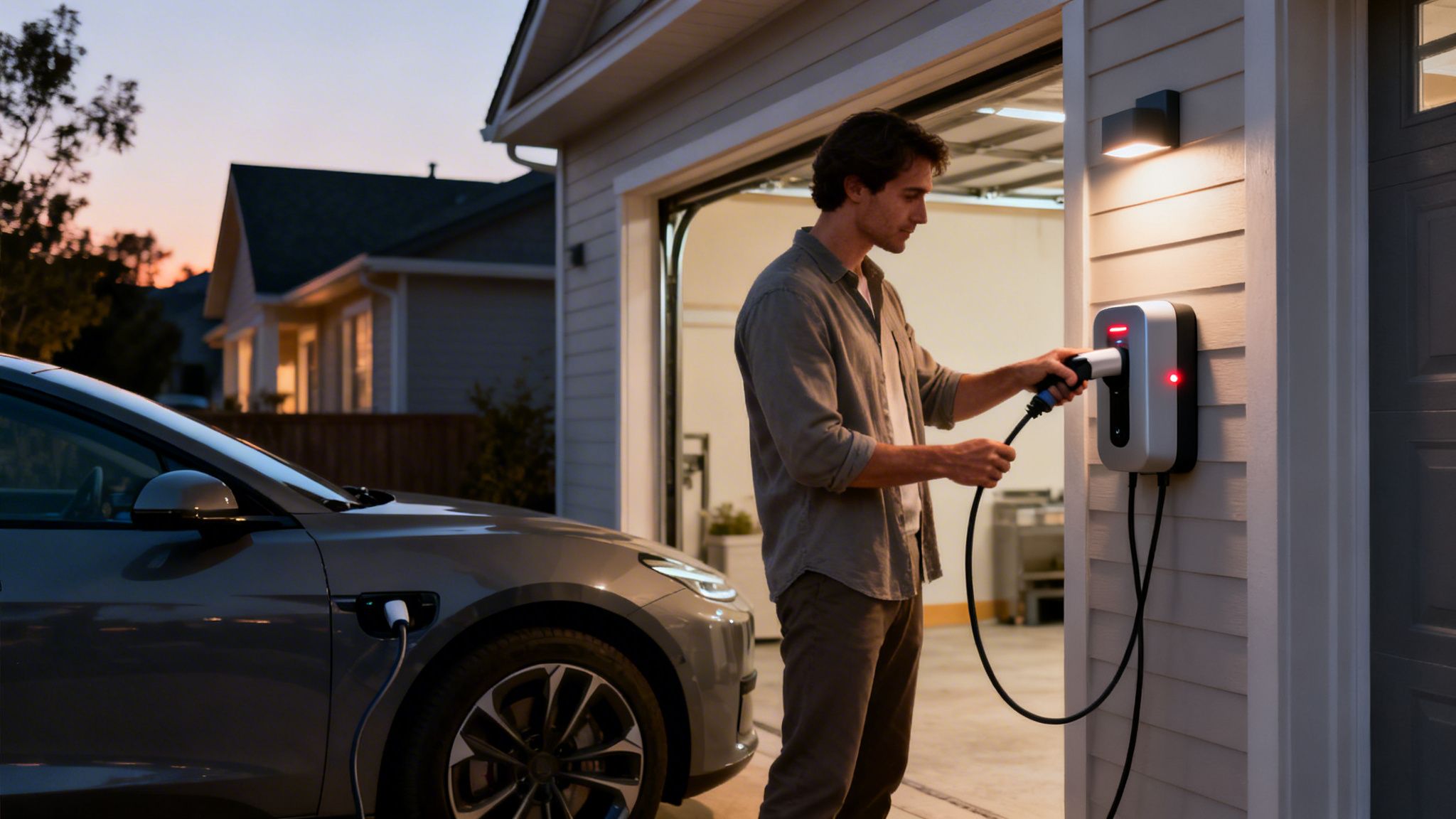
Safety and Speed First
A standard socket is simply not designed for the hours-long, high load required to charge a car. The risk of overheating and even fire is real, especially if the home's electrical installation has not been recently inspected. A professionally installed charging point, on the other hand, is connected to a separate, protected circuit. Fully compliant with the strict Belgian regulations. AREI standards.
And then there is the charging speed – a world of difference. A standard socket delivers a maximum 2.3 kW, with which you quickly get a 100 km range 5 to 8 hours you are charging. A smart charging station offers as standard 11 kW (or even 22 kW with a three-phase connection). With this, that same 100 km is charged in less than two hours.
Before we delve deeper into the smart features, let's briefly compare the basic options.
Home Charging Options at a Glance
| Feature | Standard Socket (Mode 2) | Specific Smart Charging Point (Mode 3) |
|---|---|---|
| Loading speed | Very slow (up to 2.3 kW) | Fast (11 kW to 22 kW) |
| Safety | Risk of overheating; not approved | Very safe; separate, protected circuit |
| Smart features | No | Load balancing, planned loading |
| Cost management | Follow up manually | Automatic billing, app insights |
| Installation | No (plug & play) | Professional installation & inspection |
As you can see, a dedicated charging point is clearly the superior choice for those who rely on their EV daily.
Smart Charging for Lower Energy Costs
Modern charging stations are much more than just a plug. They are packed with smart technology that optimizes your charging sessions and saves your wallet.
- Dynamic Load Balancing: This indispensable feature continuously measures the total power consumption in your home. Do you switch on the washing machine or oven? Then the charging station automatically reduces the charging speed to prevent overloading your grid. No more blown fuses!
- Scheduled Loading: Easily set your car to charge only during off-peak hours or when your solar panels are producing power at full capacity. Especially with a dynamic energy contract, this can significantly reduce your charging costs.
- Insight and Management: Via a handy app on your smartphone, you track your consumption down to the kilowatt-hour, manage who is allowed to charge, and, as a company car user, can have the charging costs automatically invoiced to your employer. No more administrative hassle.
Understand Belgian Regulations and Your Electrical Installation
Before you can enjoy the convenience of home charging, it is important that you understand your electrical installation and Belgian legislation. A correct installation is not only a legal obligation; it is the foundation for safe, worry-free, and efficient charging.
The very first thing you need to check is your grid connection. Does your home have a single-phase or a three-phase connection? This is crucial, as it directly determines your maximum charging speed. A single-phase connection usually limits you to 7.4 kW, while a three-phase setup charges speeds up to 22 kW makes possible. You will usually find this information on your electricity bill or in your meter box.
The AREI Inspection: An Unavoidable Step
Here in Belgium, every modification or expansion of an electrical installation—and therefore also the addition of a charging point for your EV—is subject to strict regulations. The AREI (General Regulations on Electrical Installations) stipulate that every new charging installation must be inspected by a recognized body after installation.
This inspection is much more than a formality; it is a crucial check to guarantee your safety. The inspector will verify that:
- The charging point is connected to a private, separate and distinct circuit.
- A specific differential switch, type A or type B is present to protect against current leakage.
- The wiring and the circuit breaker are correctly sized for the power of your charging point.
Once the inspection has been approved, you will receive a Certificate of Conformity. This document is your proof that the installation is safe and complies with all legal standards. Keep this safe, as your insurance company may ask for it.
Choosing the right installer is absolutely vital here. When selecting a qualified professional to manage the electrical installation for your EV, homeowners often assess an electrician's online presence and services, which underscores the importance of a effective electrician website design. An experienced installer not only ensures a neat installation but also guides you through the entire inspection process.
Charging in an Apartment Building
Do you live in an apartment? Then specific rules apply. Thanks to the Belgian 'right to a charging point' (droit à la prise), permission to install a charging point cannot simply be refused, whether you are an owner or a tenant. However, you must follow the correct procedure.
This means that you must formally notify the Association of Co-owners (VME) or your landlord of your plans. Compiling a detailed technical dossier is essential. Although there may be legitimate reasons for refusal, such as a risk to the safety of the building, the legislation is designed to facilitate the installation. Good preparation and clear communication are the keys to smooth approval.
By following these rules, you avoid common obstacles and ensure that your home charging solution is trouble-free and fully certified.
Choosing the Right Charging Station for Home
Choosing the right charger for your electric car is more than just picking the most powerful option off the shelf. It is a balancing act. You must take into account your car's charging capacity, your daily driving habits, and what your home's electrical system can handle.Finding the right mix is the key to a charging car at home-experience that is fast, safe and affordable.
The power of a charger is measured in kilowatts (kW). Here in Belgium, most households will opt for basic options. 3.7 kW single-phase unit to a powerful 22 kW three-phase station. Although a 3.7 kW charger is already a solid improvement over a standard socket, the 11 kW-charger (common with three-phase connections) is often the ideal choice. It offers sufficient power to fully charge most EVs overnight without overloading your grid connection.
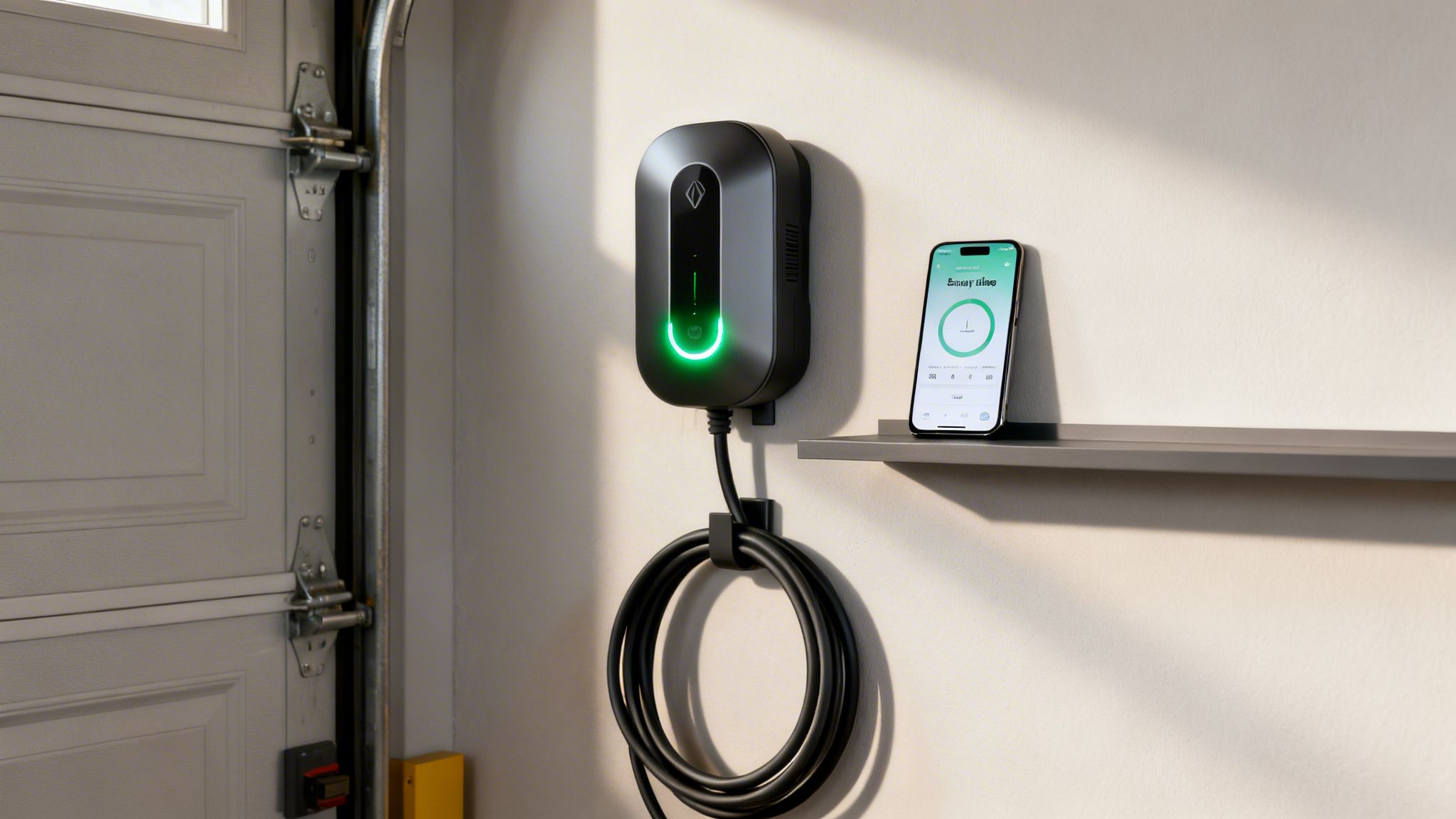
More Than Power: The Importance of a Smart Charger
Speed is great, but the real magic lies in the "smart" features of a charger. A basic charger is simply a power supply – it delivers electricity, and that is all. A smart charger, on the other hand, is a communication hub. It communicates with your car, your home's electrical system, and the power grid to make every charging session as efficient as possible. This allows you to realize significant savings and convenience.
If you would like to delve deeper into the subject, we have a detailed guide about our home charging solutions which you might find useful.
Just think of the benefits you get with smart features:
- Scheduled Loading: You can set your charger to start only when electricity is cheapest, such as during off-peak hours at night.
- Energy monitoring: An app shows you exactly how much energy you consume, giving you a crystal-clear picture of your charging costs.
- Automatic Refund: A game changer for company car drivers. A smart charger records your business charging sessions and makes reimbursement by your employer effortless.
The boom in home charging in Belgium is no coincidence. It is supported by incredible infrastructure growth and impressive EV adoption figures, placing the country firmly among the European leaders. Forecasts show that the market for EV charging equipment in 2025 55.67 thousand units will achieve, with a growth of 26.52% to more than 180 thousand by 2030. This rapid expansion demonstrates how essential smart, future-proof charging solutions are. You can discover more insights about the Belgian EV charging market on Mordor Intelligence.
How Dynamic Load Balancing Prevents Overloading
If there is one smart feature that is absolutely crucial, it is it dynamic load balancing. Think of it as an intelligent traffic controller for the electricity in your home. It constantly monitors how much power your entire house consumes and immediately adjusts your car's charging speed to prevent overloading.
Imagine this: It is evening and your car is charging. Someone turns on the dishwasher while the oven is preheating and the washing machine is running. Without load balancing, that sudden spike in demand could easily blow your main fuse, causing a power outage throughout the house.
With dynamic load balancing, the charger simply reduces the power to your car for a few minutes. As soon as the oven reaches its temperature or the dishwasher finishes its heating cycle, the charger automatically increases the speed again. You won't even notice. It ensures that all your appliances can operate safely alongside your charger, without ever pushing your home's electrical system beyond its limit. It is seamless protection that offers total peace of mind.
A Cost-Benefit Analysis: Investments and Benefits
Installing a home charging point is more of an investment than an expense. To truly see the value, you need to look at the full picture: the hardware, the installation, and the available financial benefits here in Belgium. When we talk about the costs of charging car at home, it is never just about the price tag of the charger itself.
The final invoice for the installation can vary somewhat. It really depends on your home's current electrical installation and the distance from the charger to your main fuse box. A simple, straightforward job might cost just a few hundred euros. However, if we need to run a lot of new wiring or navigate a tricky layout, the costs will naturally be higher. At Blulinc, we believe in total transparency, so we always provide you with a clear quote before work begins—no surprises.
What about the Belgian tax benefits?
The Belgian government is a strong proponent of electric mobility and offers several attractive financial support measures to facilitate the transition. There was a huge incentive for installing home charging points, notably a tax reduction that ran from September 1, 2021 to August 31, 2024.
During that period, homeowners and tenants who installed an intelligent charging point could receive a substantial tax reduction on their investment. This was a direct response to the explosion in the number of electric vehicles: against 2023 were there 190,000 fully electric vehicles (BEVs) on the road, a stunning rise of 111% with respect to the 90,000 in 2022. You can read more about the rise of EVs in Belgium on Go Electra.
Although that specific scheme has ended, the government's commitment to green energy remains strong. We see similar support for other sustainable home improvements. For example, it is common to have things like heat pump rebates can be found in various regions, showing a clear trend in encouraging eco-friendly choices at home.
Reimbursement as a Driver of a Company Car
This is where a smart charger really shows its added value, especially if you have a company car. It completely simplifies the reimbursement of the electricity you consume, making it a tax-advantageous solution for both you and your employer.
Here is the explanation:
- Extremely Accurate: Your smart charger knows precisely how much electricity went into your company car, and nothing else.
- Automatic Reporting: It automatically forwards the consumption data to your employer's management platform. No spreadsheets, no manual follow-up.
- Simple Refund: Your employer reimburses you the exact amount, based on a fixed rate per kWh. This is often included in a mobility budget or cafeteria plan.
We often call this 'split-billing', and it is a game changer. It takes all the guesswork out and keeps your personal electricity consumption completely separate from your business charging sessions. It is pure, fair, and hassle-free for everyone.
When you take into account the lower costs of home charging and the possibility of a refund, installing a home charging station simply makes financial sense. You are not just buying convenience; you are investing in a smarter, safer, and more economical way to drive.
What You Can Expect from Installation and Smart Management
So, what exactly happens when it is time to install your home charger? Preparing your home for the charging your car at home is actually a fairly quick process when you have it carried out by professionals.
It all starts with a detailed on-site inspection. A certified technician will visit to assess your electrical panel, discuss the best location for the charger with you, and map out the cable route. This initial visit is crucial to ensure that everything is prepared for a safe and efficient installation.
At Blulinc, we handle the entire process. From that initial inspection to the final activation, our goal is to make the experience completely seamless. The installation itself is carried out with care to cause minimal disruption in your home, while adhering to all Belgian safety standards.
The Installation Process and the Final Inspections
Once the charger is physically installed, there is one crucial step left: the mandatory AREI inspection. This is not a formality. An external inspector will visit to verify that the new, separate circuit, the residual current device, and all connections are perfectly safe and compliant with regulations.
When your system receives the green light, it is officially certified and ready for use. Consider it your guarantee of a safe and reliable charging setup for years to come.
The infographic below guides you through the key phases of your investment, from purchasing the hardware to enjoying the long-term fuel savings.
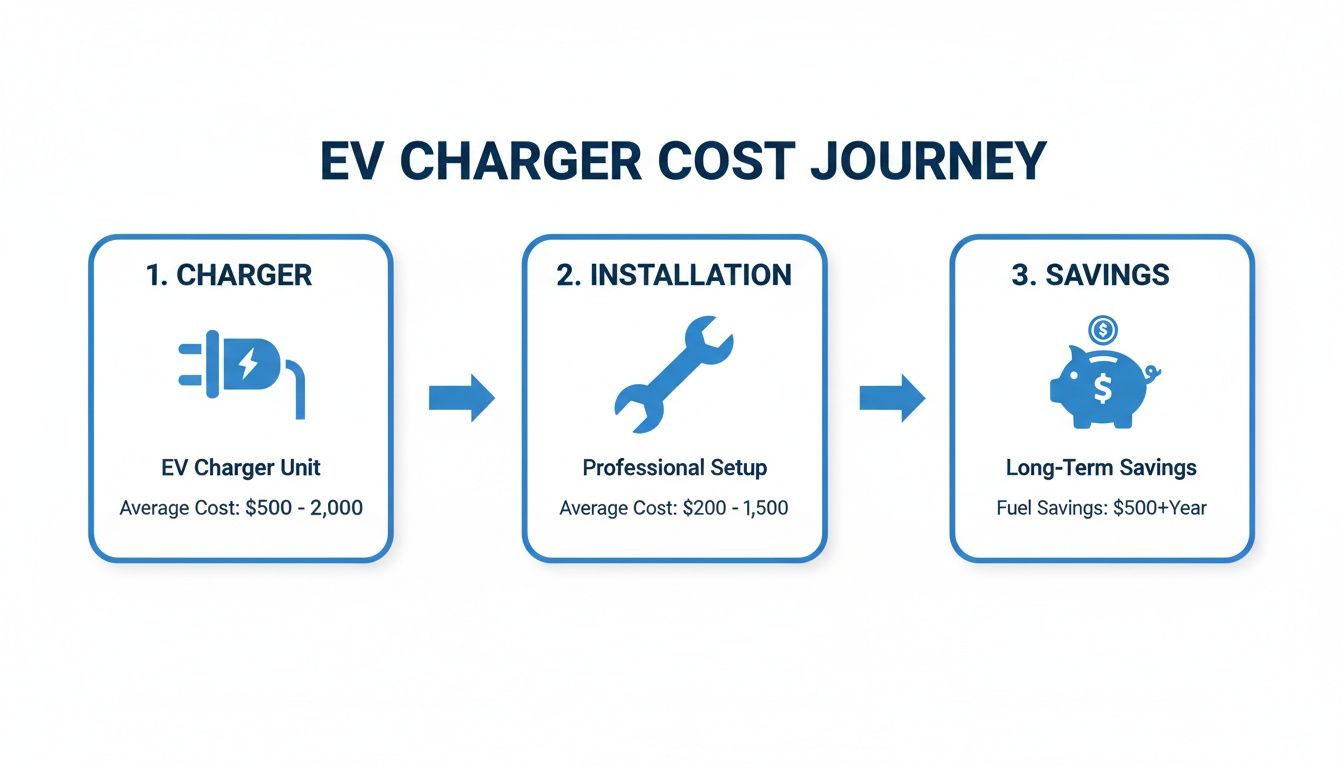
As you can see, the initial investment in the charger and installation quickly pays for itself through significant ongoing savings at the pump.
Unlock Smart Energy Management
But your journey doesn't stop as soon as the charger is on the wall. The real magic lies in the smart management. Our platform gives you full control and total visibility over your energy consumption.
You can monitor every charging session in real time, keep an eye on the costs, and even schedule charging for when electricity is cheapest or when your solar panels are catching full sunlight. If you really want to get the most out of your installation, check out our guide on how to activate the P1 port on your smart meter.
The home charging infrastructure in Belgium is growing at an incredible pace, joining a public network that in 2023 44,000 points reached—an increase of 82% compared to the previous year. This growth makes a private, smart-managed charger more important than ever, especially now that EV sales continue to rise.
Take, for example, an SME in Ghent with 10 electric company cars. By charging at night at a lower rate (€0,25/kWh) instead of at a public charging station during the day (€0,60/kWh), this company saves thousands of euros annually. A smart home charging strategy with automatic reimbursement for employees is essential here.
To complete the package, our integrated solution comes with a charging card that gives you access to a vast network of more than 900,000 public charging points throughout Europe. This combination of intelligent home charging and extensive access on the go ensures you are always prepared, whether you are just popping to the store or heading out on a road trip.
Frequently Asked Questions about Home Charging of an EV in Belgium
The switch to electric driving and home charging often raises questions. It is new territory for many people.To help you make the switch with confidence, we have formulated clear answers to the most common questions from homeowners, tenants, and businesses in Belgium.
Can I install a charger if I rent or live in an apartment?
Absolutely. Belgian legislation is fully on your side when it comes to the charging your car at home, even if you are not the owner of the property. The legislation surrounding the 'right to the plug' offers both tenants and co-owners of an apartment a solid legal basis to apply for their own charging point.
The first step is to formally notify your landlord or the Association of Co-owners (VME) of your plans. You must submit a clear proposal containing all the technical details of the installation. Although they may refuse for a legitimate reason—such as a serious risk to safety or the structure of the building—the law is designed to encourage them to say yes. Good communication and a well-prepared file are your best allies here.
How does the reimbursement for a company car work?
This is exactly where a smart charger shows its true value. It creates a perfectly seamless and fiscally compliant system for the reimbursement of the electricity you consume for your company car. The entire process is automated, so there is no administrative hassle for you or your employer.
A smart charger measures every kilowatt-hour used to charge your car and keeps this separate from your regular household electricity consumption. This data is then automatically sent to your employer's management platform. Based on an agreed rate per kWh, your employer can reimburse you accurately. This "split-billing" approach is fair, transparent, and fully compliant with tax regulations. A win-win situation.
What happens to my charger if I move?
Your charging station is your property—you purchased it, it is yours, and you can take it with you. When you move, the process is quite simple. A certified electrician can dismantle the unit at your old address and install it at your new address.
It is important to remember that the new installation is a new AREI-requires inspection. This is crucial to ensure that the setup in your new home meets all recent safety standards and complies with Belgian regulations.
This portability means that your investment in a high-quality home charger continues to pay off and offers you the same convenience, wherever you live. It is a solution designed to move with you.
Ready to make home charging a reality? The experts from Blulinc are ready to guide you every step of the way, from choosing the right charger to managing the entire installation and inspection.