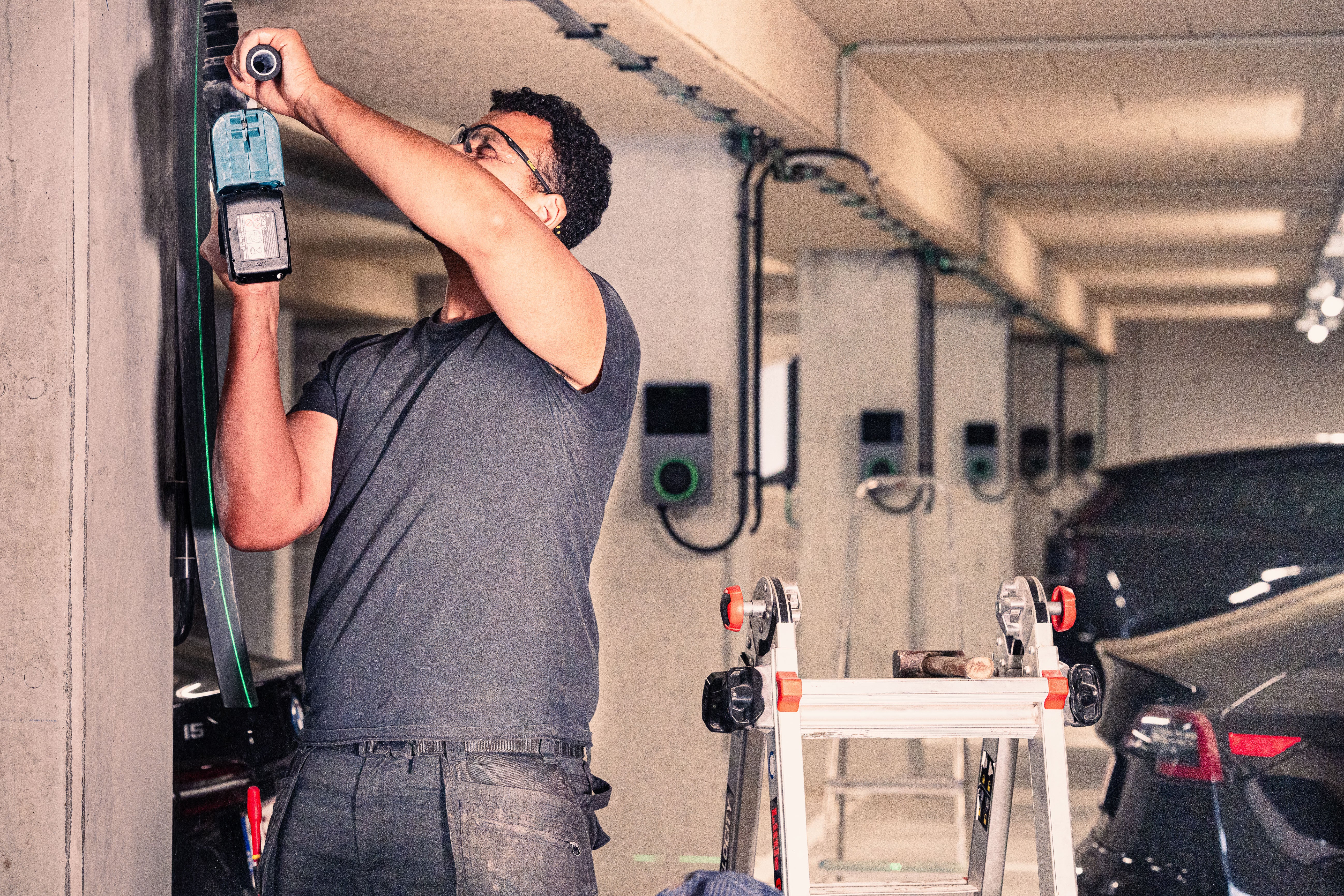


Is your company parking lot ready for the electric revolution? With Belgium mandating all new company cars be zero-emission by 2026, the demand for workplace charging isn't a future problem—it's an immediate priority. For many businesses, the thought of installing EV chargers brings up questions of cost, complexity, and disruption. But what if you viewed it not as an expense, but as a strategic investment in your future, much like upgrading your company's internet was a decade ago?
Why Your Business Needs an EV Charging Strategy
The shift to electric mobility is accelerating, fundamentally changing how Belgian businesses operate. As more of your employees, customers, and partners switch to electric vehicles (EVs), the need for convenient charging is becoming a standard expectation. For companies in Belgium, this transition presents a golden opportunity to lead the pack.
An electric car charging station installation is more than just a utility; it's a powerful statement about your brand. It signals that you are a forward-thinking employer capable of attracting top talent, committed to sustainability, and prepared for an all-electric future. This isn't just about keeping up; it's about gaining a competitive edge.
The Strategic Advantages of Workplace Charging
Implementing a thoughtful charging strategy delivers tangible benefits that extend far beyond simply plugging in a car. It becomes a catalyst for growth, efficiency, and positive brand perception.
Here’s what you stand to gain:
-
Attract and Retain Talent: In a competitive job market, workplace charging is a highly valued perk. It shows you support your team's sustainable choices, making your company a more attractive place to work.
-
Achieve Sustainability Targets: Powering your on-site chargers with renewable energy directly contributes to your Corporate Social Responsibility (CSR) goals and slashes your company's carbon footprint—a significant win for both regulatory compliance and public image.
-
Future-Proof Your Fleet and Property: As commercial fleets transition to electric, on-site charging becomes a logistical necessity. For example, a fleet of 20 electric delivery vans charging overnight at your facility ensures they are ready for the next day's routes, eliminating reliance on the public charging network.
-
Create New Revenue Opportunities: You can offer public access to your chargers, turning a business amenity into a new income stream and accelerating your return on investment.
Installing EV chargers is a proactive move that turns a potential headache into a strategic asset. By 2030, Belgium is expected to have nearly 2 million electric vehicles on the road, creating a massive demand that businesses like yours are perfectly positioned to meet.
This guide will walk you through the entire process, from choosing the right chargers to planning your site and managing energy use. We’ll help you build a reliable, cost-effective charging network that fits the specific needs of your Belgian business.
Ready to see how EV charging can work for your organisation? Request a free consultation with one of our e-mobility experts today.
Your First Step: A Thorough Site Assessment
Before a single cable is laid or a charger is ordered, every successful EV charging project begins with a detailed site assessment. You wouldn't build a house without a blueprint, and this is no different. This foundational step is crucial for understanding your property's potential and, just as importantly, its limitations. Getting this right from the start prevents costly surprises down the road.
A professional site assessment is more than a quick look at your car park. It’s a deep dive into your existing electrical infrastructure to determine if it can handle the increased demand from EV chargers. In our experience, underestimating this step is the number one reason projects exceed their budget.
Evaluating Your Electrical Capacity
Think of your building’s electrical system as the heart of your charging project. We need to confirm it’s strong enough to support the number of chargers you envision—not just for today, but for your future expansion plans.
During the assessment, we look closely at your current infrastructure to see if a dedicated power distribution center is needed to manage the new load. The capacity of your main electrical panel and the local grid transformer are the two most critical checkpoints. If they are already operating near their limit, adding a bank of EV chargers could easily trigger overloads and service disruptions.
For instance, a medium-sized office building might have enough spare capacity for two or three 7kW AC chargers without major modifications. However, if your plan is to install ten chargers for a growing sales fleet, you will almost certainly require a significant upgrade to your grid connection. Identifying this need early is essential for accurate budgeting and project timelines.
Pinpointing Optimal Charger Locations
Where you place your chargers is just as important as having the electrical capacity to power them. The ideal locations strike a balance between driver convenience and installation practicality.
Here are a few factors we help you consider when scouting locations:
-
Proximity to Power Source: The farther a charger is from your main electrical panel, the higher the cost of cabling and trenching. Placing chargers closer to the building can significantly reduce installation expenses.
-
Daily Traffic Flow: Observe where people naturally park. Installing chargers in these high-traffic, easily accessible areas encourages use and improves the overall user experience.
-
Future Expansion: Don't just plan for today. Where could you add more chargers in two or five years? Planning for future growth now makes scaling your infrastructure simpler and more cost-effective when the time comes.
This process shows how a thoughtful EV strategy, kicking off with a solid site assessment, becomes a powerful tool to attract talent, hit your sustainability targets, and future-proof your business.
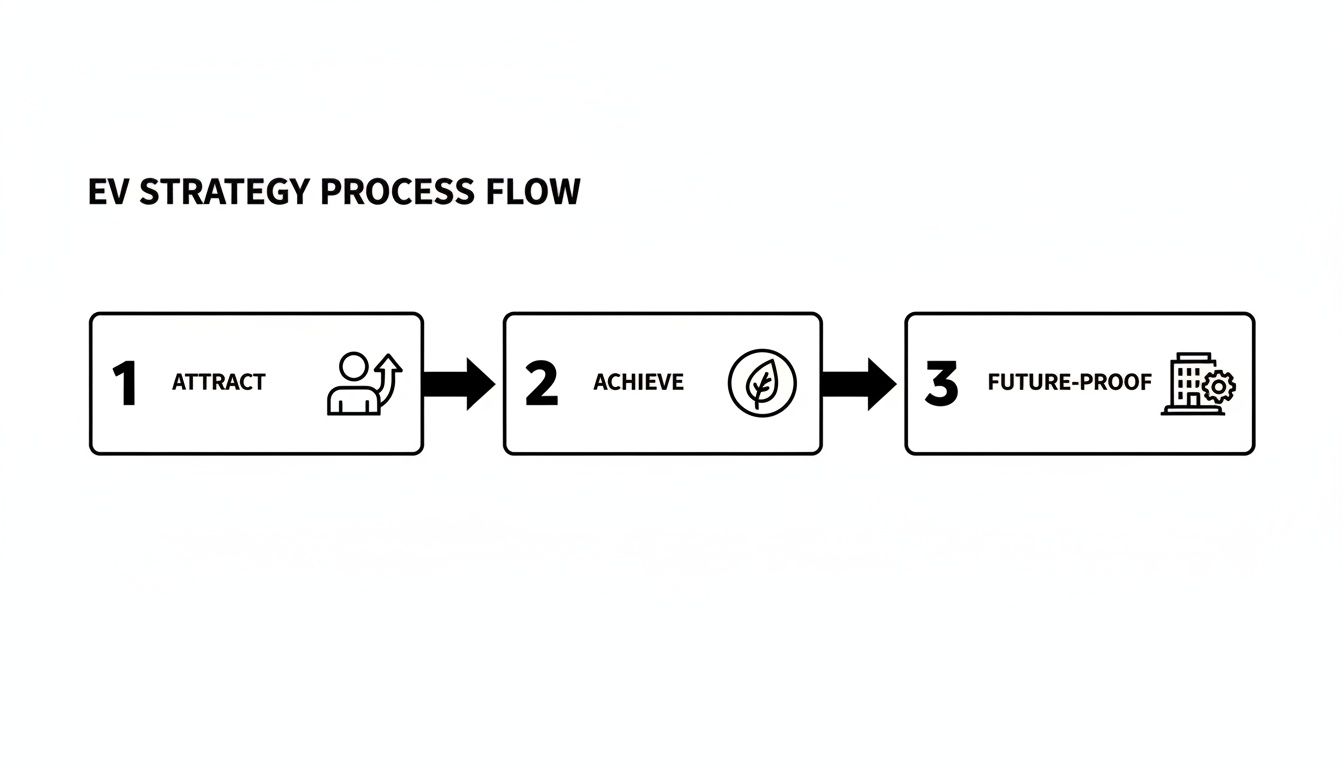
This strategic approach ensures your investment delivers value across the board, transforming a simple utility into a genuine competitive advantage.
A detailed site assessment isn’t an optional extra; it's the most important investment you can make in your charging project. It gives you the clarity to design a system that’s efficient, scalable, and perfectly matched to what your business actually needs.
By taking the time to properly assess your site, you’re building your EV charging infrastructure on solid ground. It’s what separates a smooth-running project from one that's bogged down by unexpected costs and delays.
Curious about what your site could handle? A great starting point is to use our simple tool to calculate your potential EV charger needs and get a first look at what might be involved.
Choosing the Right Chargers for Your Business
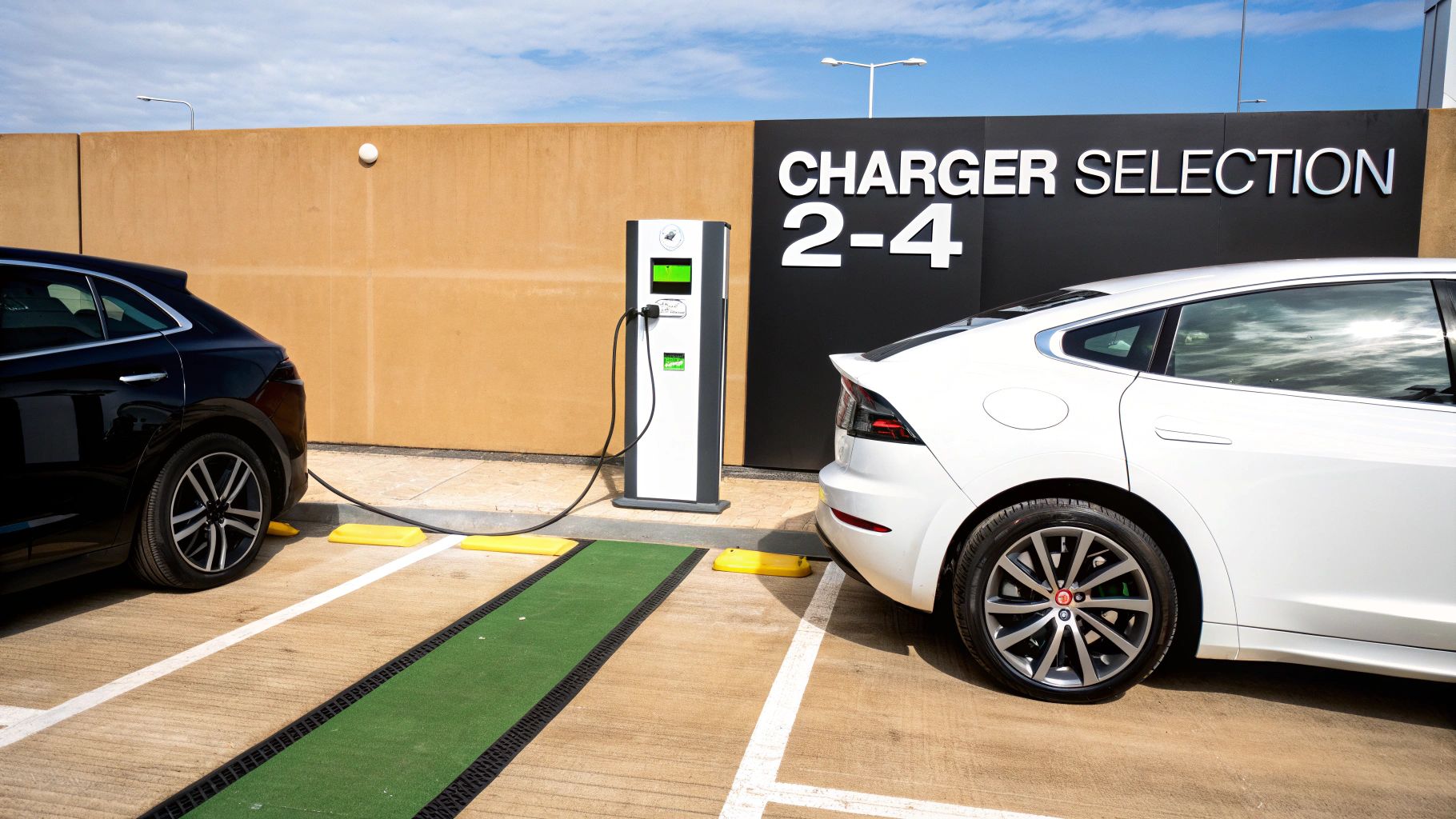
Not all EV chargers are created equal. Selecting the right hardware is less about chasing the latest technology and more about understanding the daily rhythm of your business. The ideal charger for an employee's car parked all day is entirely different from what's needed for a delivery van that must return to the road quickly.
Making the right choice ensures your electric car charging station installation delivers immediate value. It's like choosing the right tool for the job: you need to match the hardware to your specific operational needs to achieve the best results.
AC vs DC Chargers: A Tale of Two Speeds
Your first major decision is between AC (Alternating Current) and DC (Direct Current) chargers. This choice is fundamental, as it dictates charging speed, cost, and ultimately, who you can best serve on your property.
-
AC Chargers (Level 2): These are the workhorses of everyday charging, commonly found in workplaces and commercial car parks. AC chargers supply power to the vehicle's onboard converter, which then charges the battery. They represent a cost-effective solution for vehicles that will be parked for several hours or overnight.
-
DC Fast Chargers (Level 3): These are the sprinters. DC chargers bypass the car’s onboard converter and deliver power directly to the battery, enabling significantly faster charging times. This speed comes at a higher cost for both the unit and the installation, which often requires a more powerful grid connection.
Matching Hardware to Your Operations
Let's apply this to real-world Belgian business scenarios. A consulting firm in Brussels with 50 employees driving to the office has very different requirements from a logistics depot in Antwerp managing 15 delivery vans.
-
The Office Scenario: Employees park for eight hours. In this case, slower and more affordable AC chargers (7-11kW) are the perfect solution. They can easily recharge a vehicle during the workday without demanding a major, expensive grid upgrade.
-
The Logistics Depot Scenario: Those 15 vans must be fully charged and operational within a tight three-hour overnight window. Relying on AC chargers would create operational bottlenecks. Here, powerful DC fast chargers (50kW or higher) are essential to meet the demanding turnaround schedule.
A quick comparison can help clarify which hardware aligns with your business needs.
Comparing Commercial EV Charger Types
| Charger Type | Power Output | Typical Charging Time (Full) | Best Use Case | Relative Cost |
|---|---|---|---|---|
| AC (Level 2) | 7kW - 22kW | 4-8 hours | Workplace, fleet depot (overnight), hospitality, retail | € |
| DC Fast Charger | 50kW - 150kW | 30-60 minutes | Public charging hubs, fleet vehicles with quick turnaround needs | €€ |
| DC Ultra-Fast | 150kW - 350kW+ | 15-30 minutes | Motorway service stations, high-turnover public locations | €€€ |
As you can see, the right choice depends entirely on how long vehicles will be parked and how quickly they need to be ready.
For many Belgian businesses, the smartest setup is actually a mix of both. A few AC chargers can handle the daily needs of staff and visitors, while a single DC fast charger remains on standby for urgent fleet top-ups. This hybrid approach gives you maximum flexibility.
To enhance your strategy, integrating solar electric car chargers can dramatically reduce your long-term energy costs and boost your company's green credentials, regardless of which charger speed you choose.
Getting this right from the start prevents you from overspending on power you don't need or under-delivering on a system your operations depend on.
If you're still weighing up your options, we can help clear things up. Request a free consultation, and our experts will analyse your site and daily operations to recommend the perfect charging solution for your business.
Making Sense of Belgian Rules and Financial Perks
Planning your EV charging installation involves more than just hardware and location; you also need to navigate local regulations. Understanding the specific rules for Flanders, Wallonia, and Brussels is key to a smooth, compliant project. More importantly, it's your ticket to accessing significant financial support designed to accelerate e-mobility adoption in Belgium.
The good news is you're building on a strong foundation. Belgium's charging network has grown exponentially, establishing it as a European leader in charging availability. As of early 2024, the country surpassed 100,000 public charging points—a massive leap from just 24,100 in 2022. This growth is fueled by strong government support that your business can leverage directly.
Staying on the Right Side of Regional Rules
Each of Belgium's three regions—Flanders, Wallonia, and Brussels—has its own set of regulations. While this may seem complex, the rules are generally straightforward, focusing on safety and ensuring the stability of the power grid. Partnering with an expert who understands the regional nuances is the best way to avoid delays.
Here’s a quick overview of what you'll likely encounter:
-
Getting Permits: Most commercial installations require approval from the local council (gemeente/commune). This process verifies that your plans comply with local zoning, safety standards, and electrical codes.
-
Safety and Tech Standards: All installations must adhere to the AREI/RGIE (General Regulations on Electrical Installations). This is non-negotiable and ensures that all hardware and wiring are installed safely by certified professionals.
-
Grid Connection Approval: For larger projects, especially those involving powerful DC fast chargers, you will need approval from the local grid operator (e.g., Fluvius in Flanders or ORES in Wallonia). This confirms that the local network can handle the additional electrical load.
Making the Most of Grants and Incentives
The Belgian federal government and regional authorities are actively encouraging businesses to invest in EV charging infrastructure. They offer a range of financial incentives that make the business case for an electric car charging station installation more compelling than ever.
By strategically combining available subsidies and tax breaks, many Belgian businesses can reduce their initial investment by up to 40%. This support transforms a potential capital expenditure into a smart, government-backed asset.
One of the most significant incentives is an increased tax deduction for companies that install intelligent, publicly accessible charging stations. Depending on the specifics of your project, you could benefit from a substantial cost deduction, which directly lowers your taxable income.
For example, a medium-sized company in Flanders installing five public 22kW chargers could not only write off a large portion of the cost but may also qualify for additional regional grants for green initiatives. At Blulinc, we help our clients identify every incentive they are eligible for, manage the paperwork, and ensure all requirements are met to maximize their financial return. Our comprehensive guide explains how to unlock government support for your EV charging project.
While navigating applications can be time-consuming, the savings are well worth the effort. When you partner with us, you gain an expert who handles the administrative burden, ensuring your installation is not only compliant but also as cost-effective as possible.
Unlocking Efficiency with Smart Energy Management
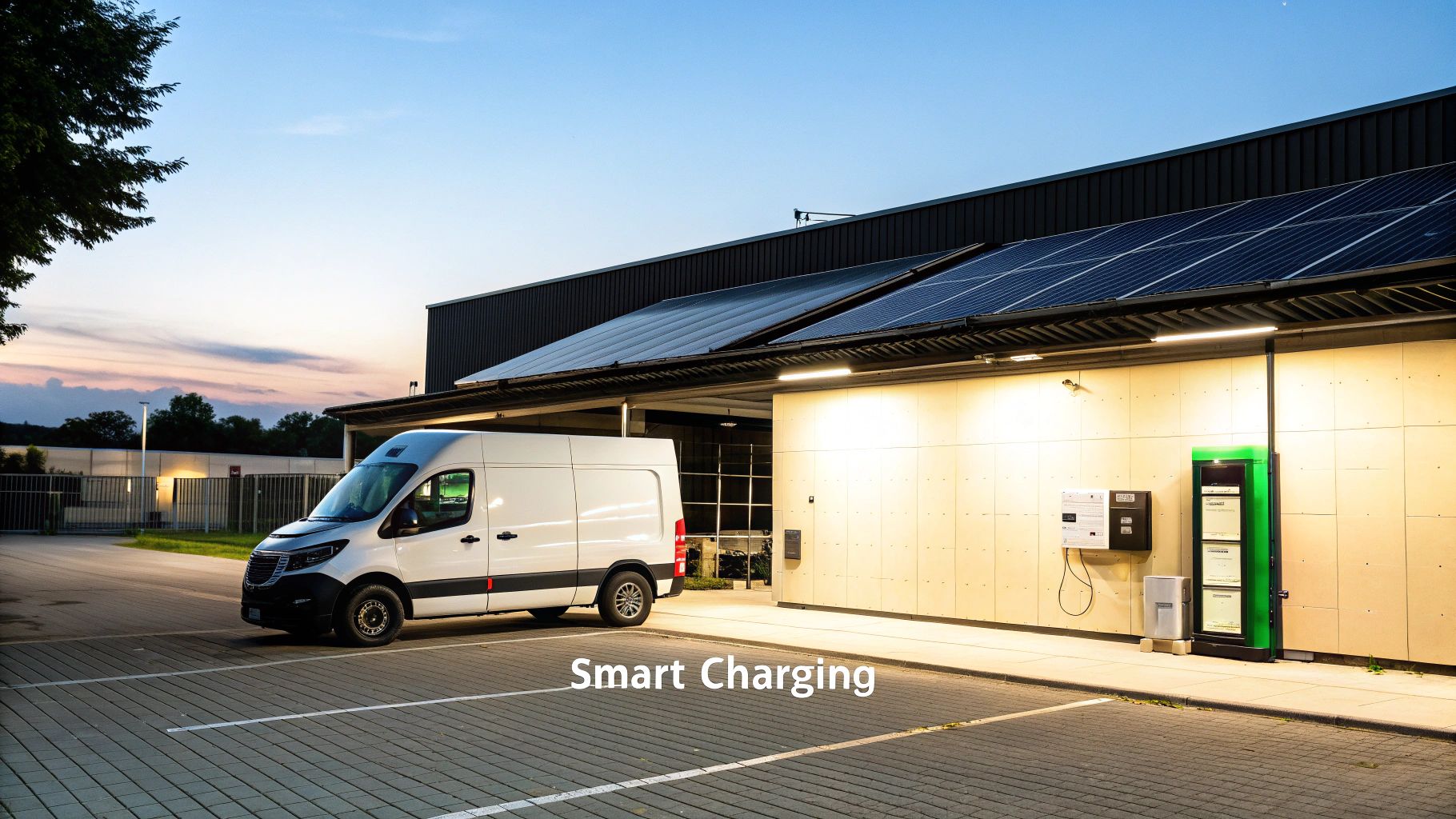
The secret to a cost-effective electric car charging station installation lies not just in the hardware you choose, but in the intelligence that manages it. Without a smart system, you risk high energy bills and potential grid overloads. This is where smart charging and dynamic load management become essential—they are the brains of your entire operation.
Think of it as an air traffic controller for your building’s electricity. Instead of allowing every vehicle to charge at full power the moment it's plugged in, a smart system intelligently manages the energy flow. It ensures your building's power limit is never exceeded, which is critical for avoiding expensive peak demand charges from your utility provider.
This intelligent power distribution is what separates a basic charging setup from an efficient, future-proof investment. It allows you to maximize the use of your existing grid connection without undertaking costly and disruptive upgrades.
The Power of Dynamic Load Management
At the core of smart charging is a technology called dynamic load management. It continuously monitors your building's total energy consumption in real-time. When overall usage is high—for example, when machinery, lighting, and air conditioning are all running—the system automatically reduces the charging speed for connected EVs.
Conversely, when building demand decreases (such as overnight), the system increases the charging speed, ensuring every vehicle is ready when needed. This balancing act operates seamlessly in the background, optimizing your energy use without any manual intervention.
Practical Benefits of a Smart System
Implementing a smart energy management platform provides significant advantages that positively impact your bottom line and simplify operations.
-
Avoid Grid Overloads: You can install more charging stations than your grid connection would typically support because the system ensures the total power draw never exceeds your site's capacity.
-
Slash Energy Costs: By scheduling charging to occur during off-peak hours when electricity rates are lower, you can dramatically reduce your operational expenses.
-
Prioritise Critical Vehicles: You can set rules to ensure essential fleet vehicles are always charged first and fastest, guaranteeing they are ready for the start of the business day.
-
Integrate Renewable Energy: A smart system can be configured to prioritize charging vehicles when your on-site solar panels are generating free, green electricity, further reducing your reliance on the grid.
A smart charging platform gives you the data and control you need to turn your charging infrastructure from a simple utility into an asset you can actively manage. This visibility is vital for controlling costs and making smart decisions as your fleet grows.
A Real-World Example in Action
Imagine a Belgian warehouse with a fleet of 20 electric delivery vans that need to be fully charged by 6 AM each morning. If all vans were plugged in at 6 PM, the simultaneous demand would create a massive energy spike, resulting in costly peak demand charges.
With a Blulinc management platform, the warehouse manager can set a simple rule: begin charging after 10 PM, when off-peak electricity rates apply. The system then automatically staggers the charging sessions throughout the night, maintaining a stable power draw while ensuring every van is fully charged for the morning shift. This simple adjustment can save the business thousands of euros annually on its electricity bills.
A great next step is to learn how your building's digital meter enables these features. You can check out our guide on how to activate your P1 port and take control with smart charging.
Ultimately, smart energy management is what turns an electric car charging station installation into a sustainable and financially savvy decision for any business.
How Should You Pay for Your EV Chargers?
You’ve selected the right hardware and software—a great first step. The next crucial question is how to finance your electric car charging station installation.
The commercial model you choose will influence everything from your upfront costs and daily responsibilities to your long-term flexibility. Fortunately, there are options tailored to fit your company’s budget and desired level of involvement. Let’s explore the main choices for businesses in Belgium.
Direct Purchase: You Own It All
This is the traditional approach: you buy the charging hardware and software outright. This model provides you with complete control over the entire system. You set the charging prices, manage the maintenance schedule, and own the asset.
Purchasing is an excellent option if your company prefers a one-time capital investment and has the internal resources to manage the charging stations.
Here’s why businesses choose this route:
-
Complete Control: You own the equipment and can configure it precisely to your needs.
-
A Tangible Asset: The chargers become a fixed asset on your company’s balance sheet.
-
Easier Subsidies: Owning the equipment often simplifies the process of claiming government grants and tax incentives.
Equipment Leasing: Modern Chargers, No Big Upfront Cost
Leasing offers a balanced approach, allowing you to install the latest charging technology without a large upfront capital outlay. You pay a fixed monthly fee for an agreed-upon term. At the end of the lease, you typically have the option to purchase the equipment, upgrade to newer models, or return it.
This model is ideal for businesses that want to preserve capital for other priorities while still offering state-of-the-art charging. It also provides predictable monthly costs, and maintenance is often included, removing another task from your to-do list.
Charging as a Service (CaaS): The All-Inclusive Option
For the ultimate hands-off, hassle-free experience, our Charging-as-a-Service (CaaS) model is an increasingly popular choice. With CaaS, you pay a single subscription fee, and we handle everything: the hardware, installation, software, ongoing maintenance, and even driver support.
Think of CaaS like your mobile phone contract. You get the latest tech and full support for one clear monthly price, without ever having to worry about repairs or your equipment becoming obsolete. It’s the simplest way to offer world-class EV charging.
For example, a property developer could use CaaS to equip a new office building with ten chargers. Instead of a significant initial investment, they have a predictable operational expense, simplifying the project's financial planning. The electric car charging station installation becomes a simple line item in the budget.
The Belgian government is fully committed to this transition. Projections show that Belgium will have nearly 2 million electric vehicles on the road by 2030, driving a national push for up to 220,000 smart charging points. This massive growth means that regardless of the financing model you choose, investing in charging positions your business for the future. You can dive deeper into the trends by reading about Belgium's EV market growth on mordorintelligence.com.
Ready to figure out the perfect fit for your business? Request a free consultation and let’s talk it through with one of our e-mobility specialists.
Frequently Asked Questions
As you map out your company’s move into e-mobility, you're bound to have questions. Installing electric car charging stations is a big step, but getting a handle on the key details makes the whole process feel much more manageable. Here are some straightforward answers to the questions we hear most often from businesses across Belgium.
We've laid out the essential info you need to move forward with confidence, helping you get a feel for timelines, operational models, and potential costs.
How Long Does a Commercial Installation Take?
From our first conversation to your chargers going live, a typical commercial project in Belgium usually takes between 4 to 8 weeks. This timeline depends on a few key factors specific to your site.
The initial consultation and site survey typically take one to two weeks. Following that, securing the necessary permits from your local authorities and obtaining grid connection approval can add several more weeks. The physical installation of the chargers and cabling is often the quickest phase—usually completed in a few days to a week—followed by final testing and commissioning to ensure everything operates perfectly.
Can We Make Our Charging Stations Public?
Absolutely! Opening your chargers to the public is an excellent way to generate a new revenue stream and attract more visitors to your business. It transforms a practical amenity into a community asset and can significantly improve your return on investment.
With a smart charging management platform, you can easily set different prices for employees, visitors, and the public. You keep full control over when the chargers are available and how people pay, ensuring your own business needs always come first.
You’ll just need to consider the practical aspects, such as clear signage, ensuring the bays are accessible to all drivers, and having sufficient charging capacity to serve both your own fleet and public users without creating congestion.
What Is the Biggest Hidden Cost in a Charging Project?
The most common—and often largest—unexpected cost in an electric car charging station installation arises from the need to upgrade the site's electrical infrastructure. This is precisely why a detailed site assessment at the very beginning is non-negotiable.
If your building's current electrical system cannot handle the additional load from multiple EV chargers, you may need a larger main distribution panel, a more powerful local transformer, or even a more substantial grid connection from the utility company. For example, while a few Level 2 chargers might be manageable, installing even a single DC fast charger almost always requires a major power upgrade. Identifying these potential costs upfront is the best way to keep your budget on track and avoid frustrating delays.
Ready to build a future-proof charging network for your business? The team at Blulinc is here to guide you every step of the way, from the first assessment to the final installation and beyond. Request a free consultation today and let's talk about what you need.